

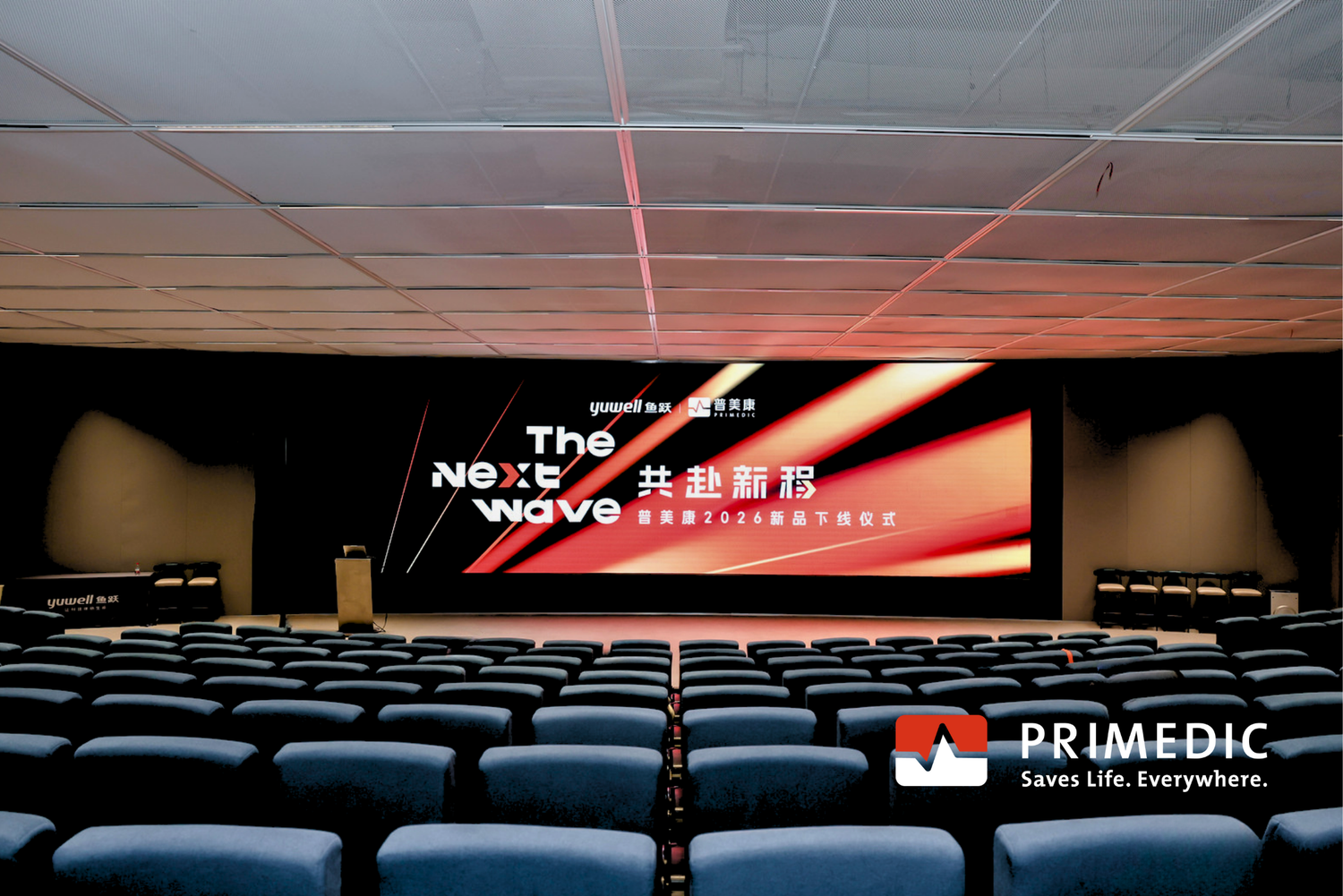
When China and Germany jointly define the next generation of emergency medical standards , what new heights will AEDs, defibrillators , and CPR reach in the future?
On December 5, 2025 , in Danyang, China , Primedic held a grand ceremony for the launch of its " THE NEXT WAVE " 2026 new product and academic summit , where it unveiled three strategic new products developed collaboratively by Chinese and German teams, leading the global AED machine , defibrillator and emergency equipment into a new era of intelligence and precision.
This event marks Primedic's official upgrade from a "single device manufacturer" to a "comprehensive emergency medical solutions provider." The concurrent industry forum brought together nearly 100 clinical experts and emergency medical practitioners to discuss the future paradigm of emergency medical care: "intelligent, precise, and comprehensive rescue."
I. Strategic Implementation: From Equipment Manufacturing to a Comprehensive Emergency Rescue Ecosystem
Since integrating into the Yuwell system in 2017, Primedic has launched a comprehensive strategic upgrade centered on digital pre-hospital emergency care, relying on the "Sino-German joint research and development" model.
The XD5/XD6 series defibrillator monitors and HeartSave H7/H8 series AEDs (cardiac defibrillators) that rolled off the production line this time have successfully connected the emergency care links of "society - family - pre - hospital - in- hospital", and are the core achievements of Primedic in creating an integrated emergency care solution.
This milestone signifies that Primedic 's strategic blueprint has officially entered the stage of practical implementation, and establishes a new technological benchmark in the global field of AED machines, CPR accessories and emergency medical equipment.

II. Technical Breakthroughs: Overcoming the Global Clinical Pain Points Caused by CPR Disruption
In the field of emergency care, the need to interrupt CPR compressions for cardiac rhythm analysis has long been a globally recognized clinical challenge. Primedic's Sino-German R&D team, based on real-world case data from over 200 countries and across ethnic groups, has developed a revolutionary technology — the iWAVE algorithm .
✔ A defibrillable rhythm can be identified while CPR is in progress.
Reduce interruption press time
Improve defibrillation success rate
Reduce the risk of myocardial ischemia in patients
Test results show that iWAVE technology has a defibrillation recognition rate that is significantly better than the current industry average, opening a new chapter for the intelligentization of AED machines and cardiac defibrillators .

On the day of the ceremony, the Primedic German team watched the live stream remotely. Alexey Gusev, the German R&D manager , offered his praise from Rottweil:
"The Chinese team's relentless pursuit of quality and strong execution have allowed German craftsmanship to be revitalized in new environments."

III. Consensus Building: Smart Emergency Rescue in the AI Era Becomes the Mainstream Direction
At the academic forum held concurrently,
Professor Lü Chuanzhu, Chairman of the Emergency Medicine Branch of the Chinese Medical Association and Academic Leader of Emergency Medicine at Sichuan Provincial People's Hospital, shared his " Suggestions for the 15th Five-Year Plan of Emergency Medicine " .
He pointed out:
In the future, emergency medicine will develop towards a direction that combines peacetime and wartime functions, enables rapid response, and is intelligent and efficient.
Upgrading pre-hospital emergency care to be intelligent and networked is the core foundation for improving the overall success rate of treatment.
AED普及and standardized CPR training remain key aspects of the pre-hospital emergency care chain.

Emergency medical experts from Nanjing and Suzhou also showcased several practical cases.
It is worth noting that:
Integrating Yuwell Primedic Emergency medical pilot programs integrating defibrillators and 5G remote guidance systems have been successfully implemented in public settings such as the Suzhou Metro , marking the first time that:
"On-site self-rescue → Remote guidance for CPR/AED → Professional dispatch"
The integration of these three elements fully validates the feasibility of a smart emergency medical care ecosystem.
Experts generally believe that:
AI is transforming emergency medicine from an "experience-driven" to a "data and intelligence-driven" approach.
Equipment capable of intelligent heart rhythm recognition, intelligent CPR guidance, and risk warning will become standard equipment in future emergency departments.
IV. Future Outlook: Building a Smart Emergency Rescue Ecosystem Based on 5G + AI
Looking towards 2026 and beyond, Yuwell Primedic will continue to drive:
5G pre-hospital emergency network
AI-powered heart rhythm recognition and intelligent CPR guidance
IoT AED and Cardiac Defibrillator Management Platform
Full-Scenario Intelligent Emergency Rescue Ecosystem

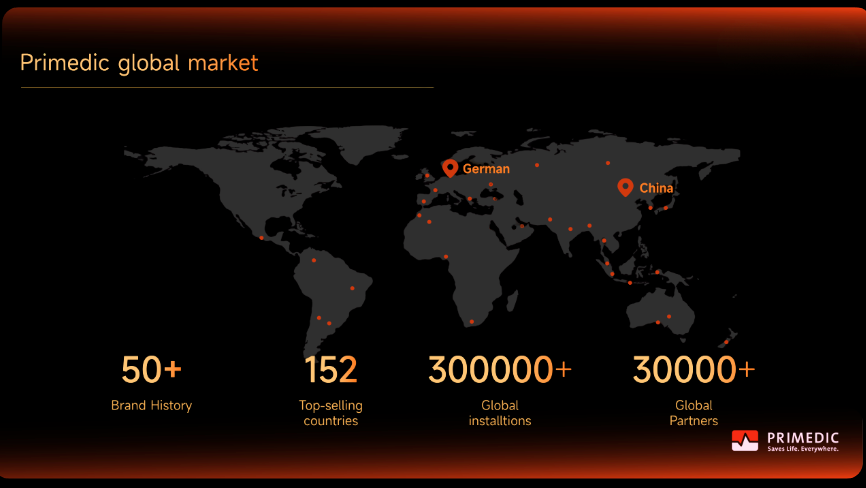
This new product launch not only represents Primedic's more than 50 years of dedication to the field of emergency care, but also symbolizes a new beginning in serving global life safety with smarter, more precise, and more efficient AED machines and emergency solutions .
In the future, Primedic will continue to contribute its professional expertise to the Healthy China initiative and the global emergency medical services sector through technological innovation, global collaboration, and ecosystem building.

Leave a comment
This site is protected by hCaptcha and the hCaptcha Privacy Policy and Terms of Service apply.