

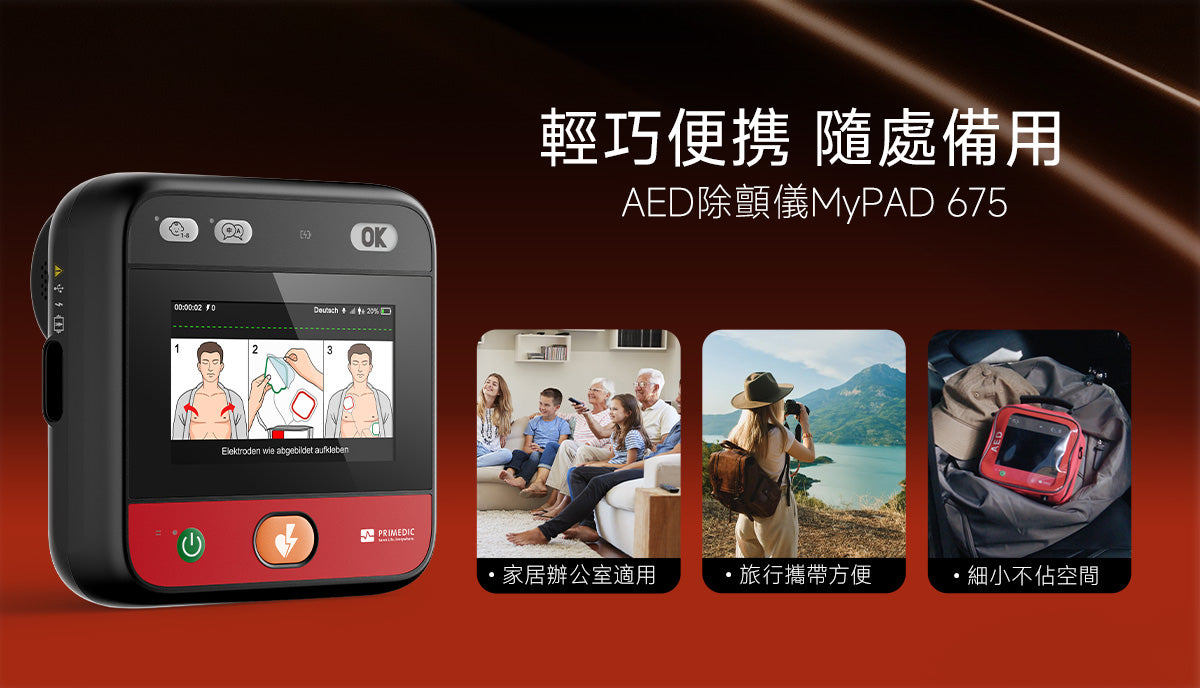
HeartSave myPAD Security Information
Chapter 4 - Equipment Safety Usage Guide
HeartSave myPAD meets currently applicable safety standards and complies with medical product regulations. When used as intended, the HeartSave myPAD and its accessories are safe. However, if the HeartSave myPAD is used incorrectly, the device and its accessories may pose a danger to the user, patient, or third party.
4.1 General Safety Recommendations
This device must not be used near flammable materials (e.g., cleaning solvents or similar substances) or in atmospheres rich in oxygen or flammable gases/vapors. Always check the environmental conditions before using this device.
Note: When storing and operating the device, pay attention to the environmental conditions specified in the technical specifications. Always follow the prompts issued by the device.
Note: The device will require approximately 1 hour to prepare for its intended purpose, and will be stored at either the minimum storage temperature (-30°C) or the maximum storage temperature (70°C).
Keep this device away from children.
4.2 Security instructions for users
Before using the equipment, ensure that the ambient temperature is within the operating temperature range specified. Do not use the equipment if it is defective or visibly damaged (such as damaged cables or the equipment casing).
4.3 Safety Instructions for Patient Protection
To use this device on a patient, you must:
- Use new, undamaged, and unexpired electrodes for each patient to avoid any possible skin burns.
- Only connect the SavePads electrodes to the device.
- Do not place the device near or near other sensitive devices (e.g., some measuring devices are always sensitive to magnetic fields) or strong sources of interference. Keep it at a safe distance from other energy sources (such as microwave ovens, induction cookers, etc.). These devices may cause the device to malfunction or become inoperable. Ensure that all other devices are disconnected from the patient before defibrillation.
- The electrodes are placed precisely according to the diagram.
- For patients using implanted devices, place the pad 8 centimeters away from the device, or use an alternative pad location.
- Do not touch the patient during electrocardiogram analysis.
- Stop cardiopulmonary resuscitation during electrocardiogram analysis.
Please note the following electrode cables: Do not place cables around the patient's neck to avoid causing suffocation.
Potential side effects
Note the energy involved in shock – AED defibrillation works by depolarizing the myocardium with electrical current. To achieve its intended purpose, an AED needs to release a large amount of electrical energy. This energy can potentially cause myocardial damage.
4.4 Safety precautions for protecting third parties
Before defibrillation, loudly and clearly warn those around you to ensure they have no contact with the patient.
4.5 Safety Instructions for Equipment Protection
Equipment repair and installation should only be performed by authorized professionals. Only original parts supplied by the manufacturer should be used.


Leave a comment
This site is protected by hCaptcha and the hCaptcha Privacy Policy and Terms of Service apply.