

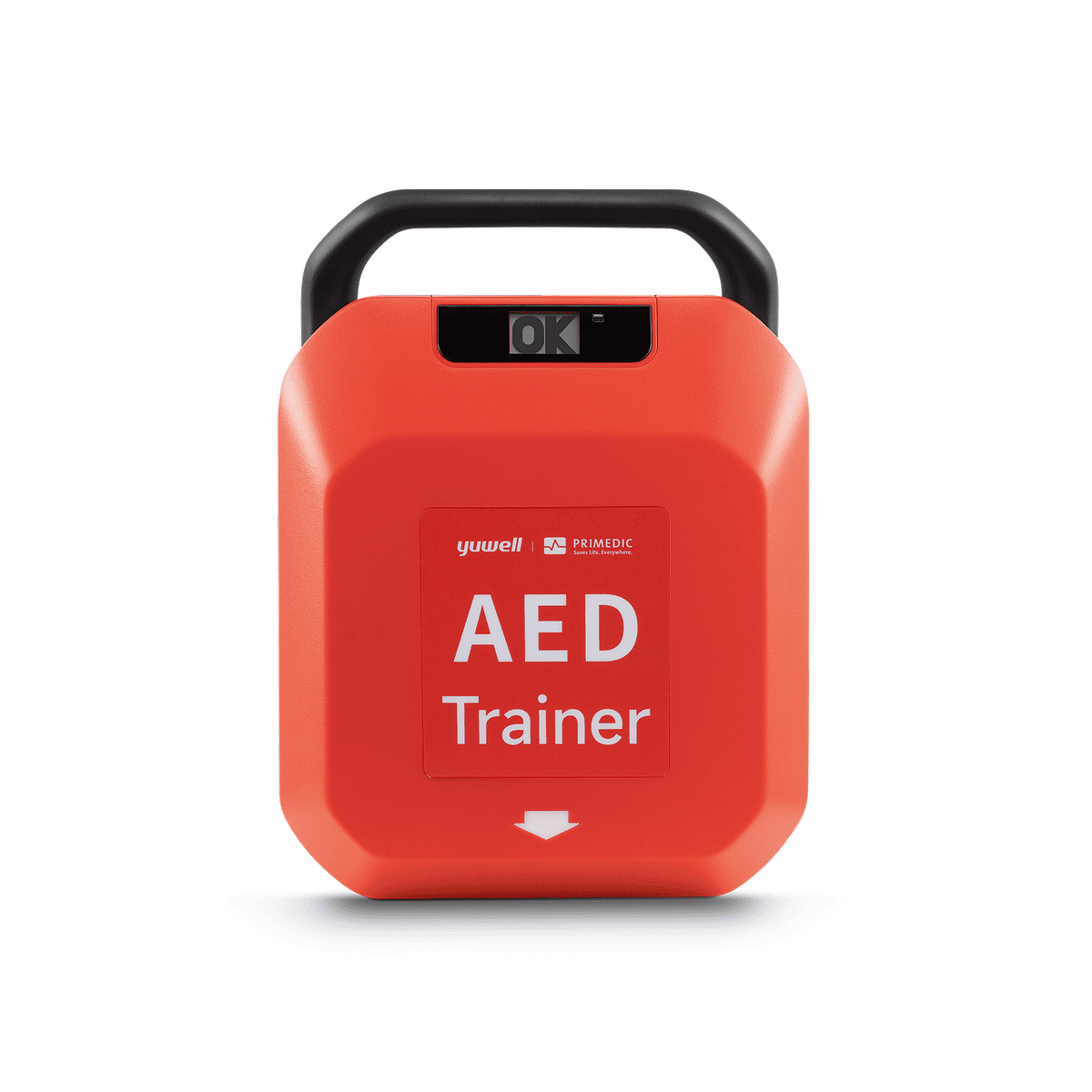
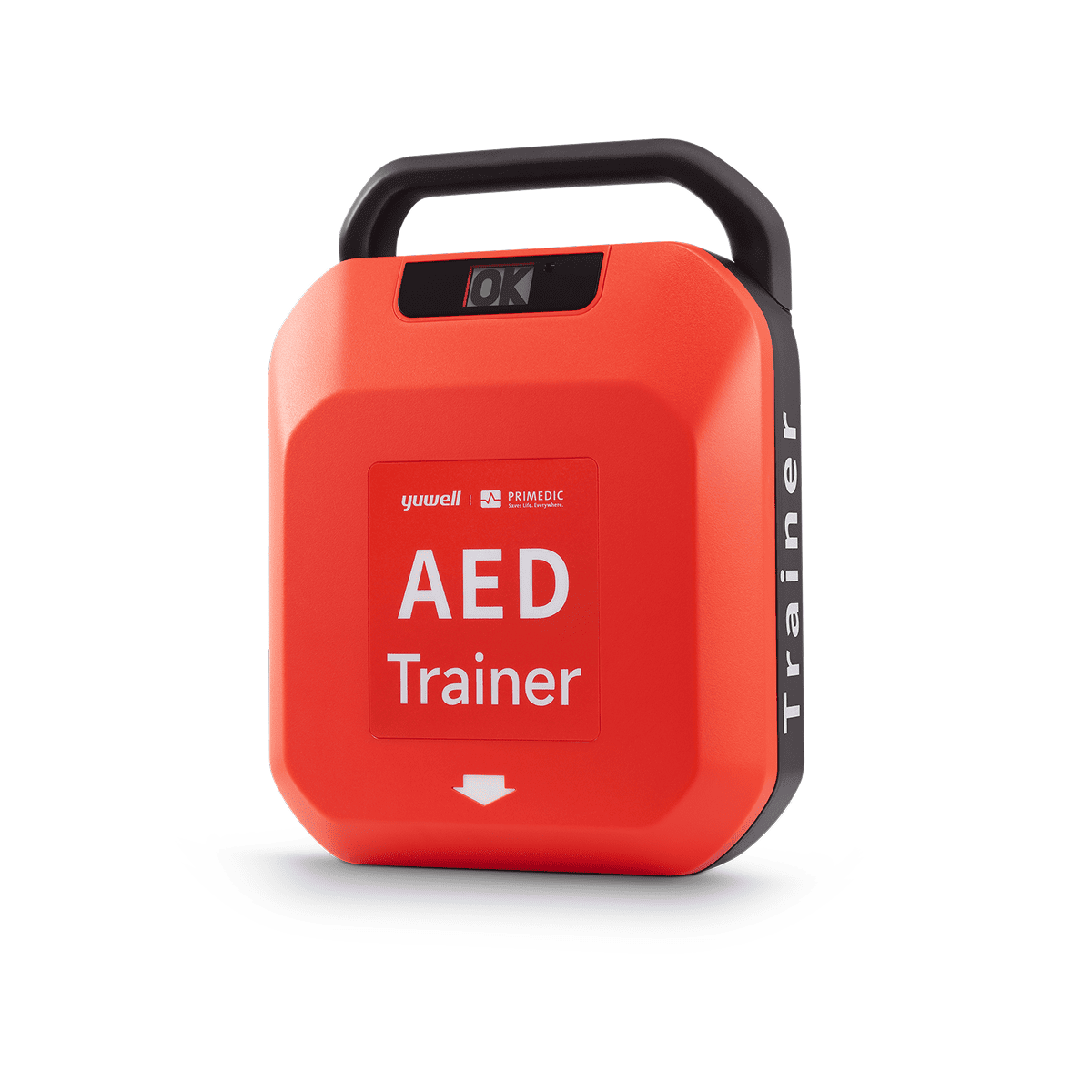


HeartSave Y | YA AED Trainer
Simulates a real device.
For teaching and training purposes only; no defibrillation function.
If you need personalized customization, you can contact customer service directly and we will provide you with professional support
Payment Methods:


Delivery method:


Made in Germany since 1973
The PRIMEDIC brand was born in Germany in 1973. It focuses on R&D and innovation in the field of emergency care. It has core products such as biphasic defibrillator monitors and automatic external defibrillators (AEDs). It is one of the brands with the most complete defibrillator product lines in the world.
-
52years
Brand History
-
150+
Service Country
-
300,000+
Global installation

BTE bidirectional wave technology provides a solid foundation for the success rate of emergency treatment
Through intelligent control of the bidirectional current waveform, the system instantly detects patient impedance and automatically adjusts energy to reduce cardiac burden, making defibrillation both powerful and safe.
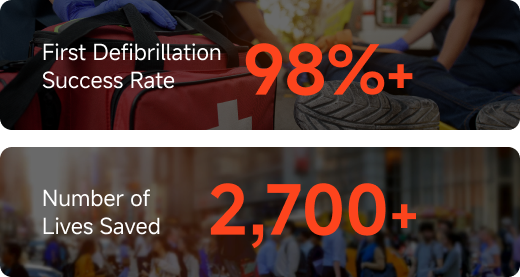
Features of AED Automated External Defibrillator Y (with screen)


Charging mode starts as soon as the cover is opened, with a quick response of 6 seconds
1-second boot-up + 5-second analysis + 0-second charging
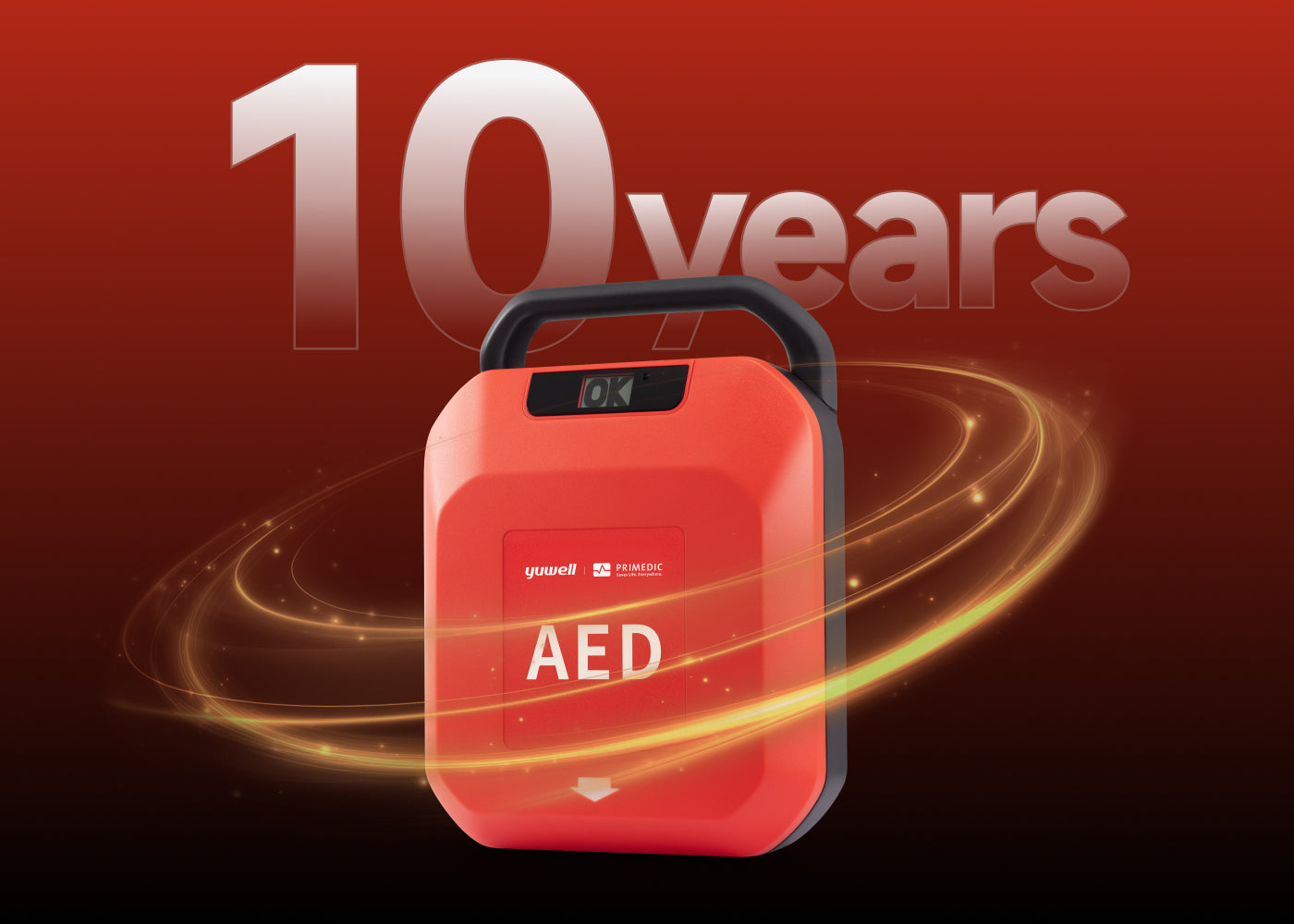
Excellent performance and long-term protection
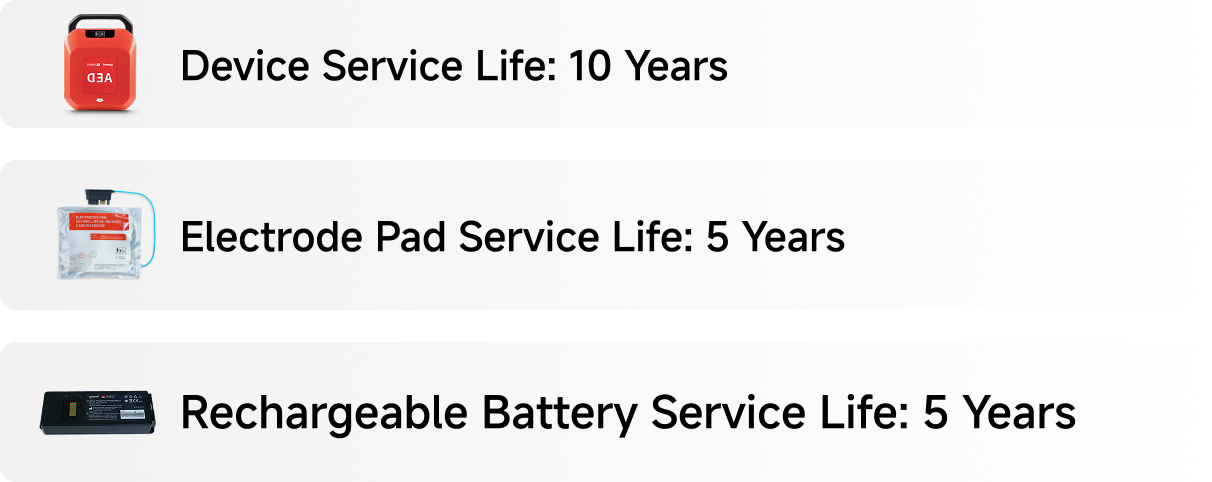
Rigorous quality testing and certification ensure stable and reliable performance. Strong battery life meets extended emergency needs. The AED main unit has a 10-year lifespan, the battery has a 5-year standby lifespan, and the electrode pads have a 5-year standby lifespan.

Suitable for public places and a wide range of people
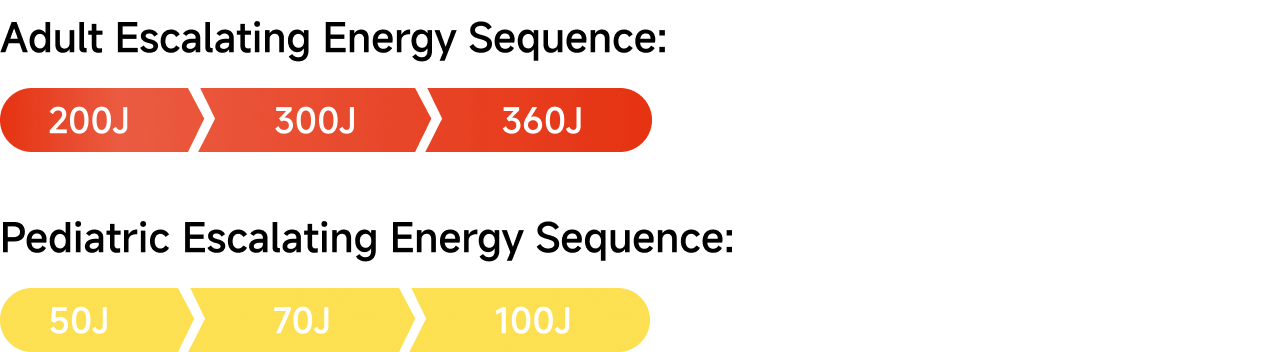
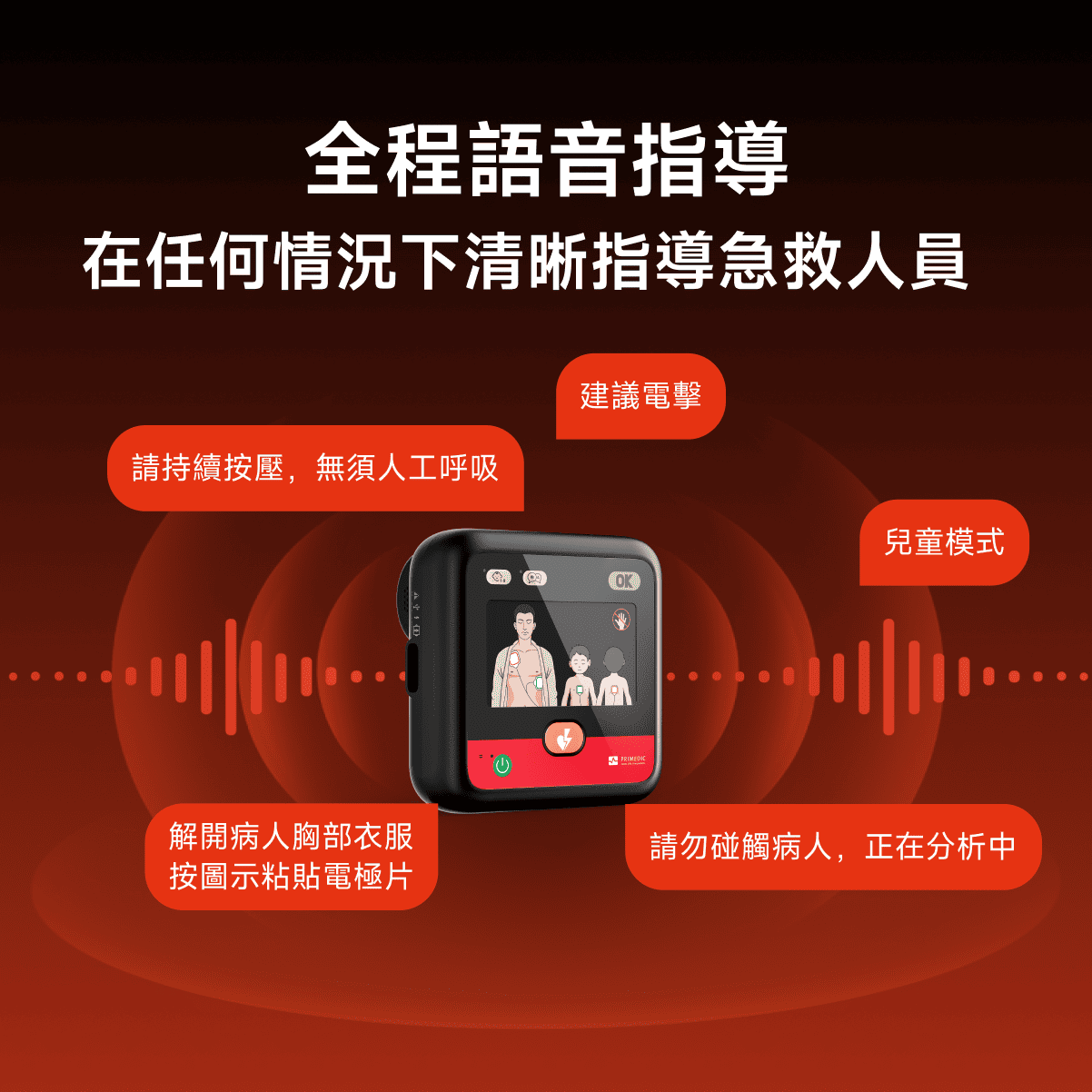
The device features a child/adult mode that can be switched at the touch of a button, adapting the energy output to different ages. The next time you turn the device on, it will reset to adult mode, adapting to complex scenarios while balancing first aid efficiency and safety.
The battery is easy to remove
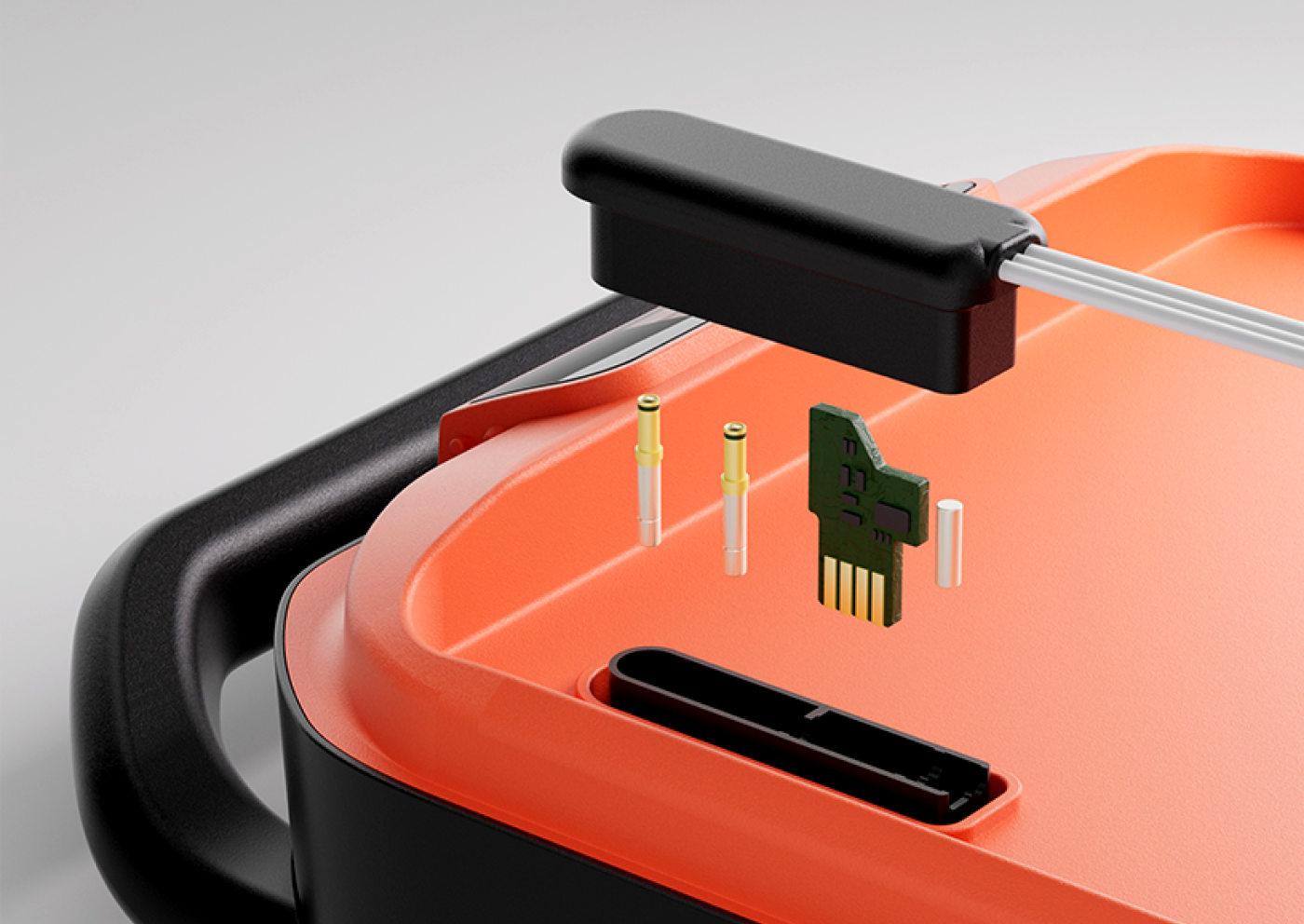
The battery can be removed by hand, which is convenient and worry-free


The electrode sheet is stored inside the body, and it is more worry-free when equipped with a protective cover.
An optional CPR feedback unit is available to provide real-time guidance on compression frequency and depth. The CPR feedback unit is integrated with the electrode pads, eliminating the need for additional connections.

Equipment Maintenance Quick Check
The device status is intuitively indicated on the screen using "OK/X", and low battery status prompts are automatically issued, allowing maintenance personnel to quickly understand the device status.

Easy to store, five-in-one first aid kit
The accessory pack is integrated with the main unit, eliminating the need to purchase a separate first aid kit.
-

Clipper
-

Razor
-

Glove
-

Artificial respiration membrane
-

towel


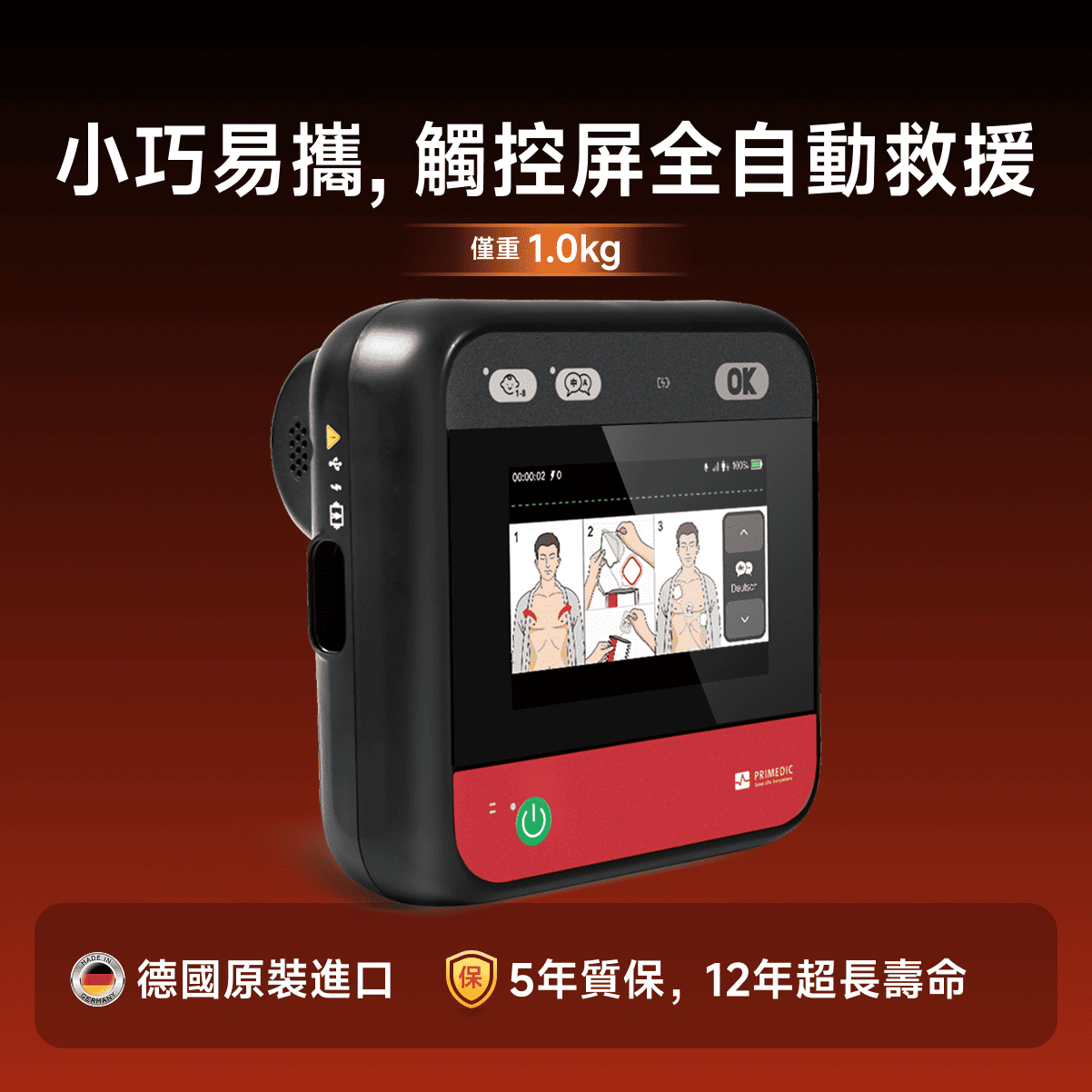
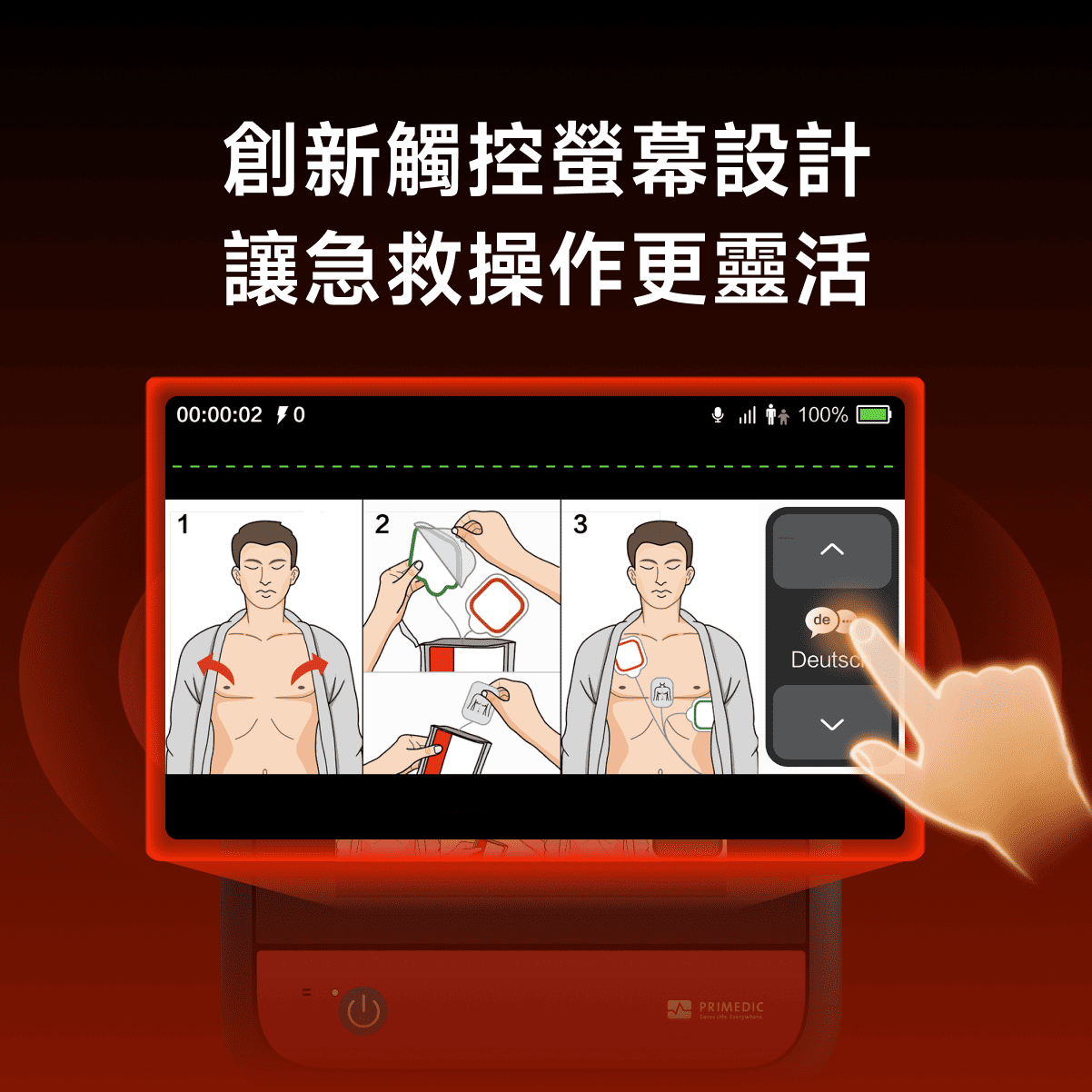
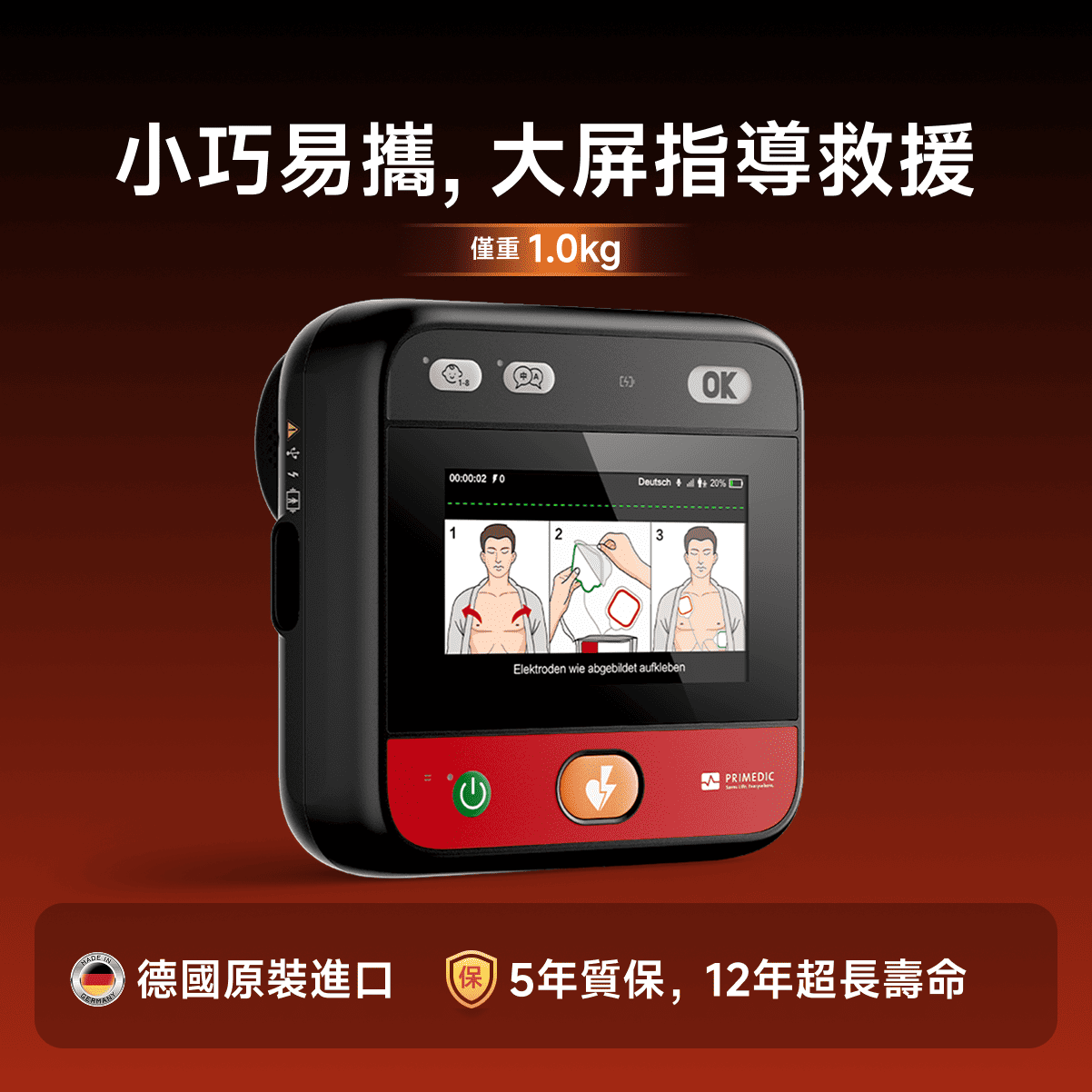
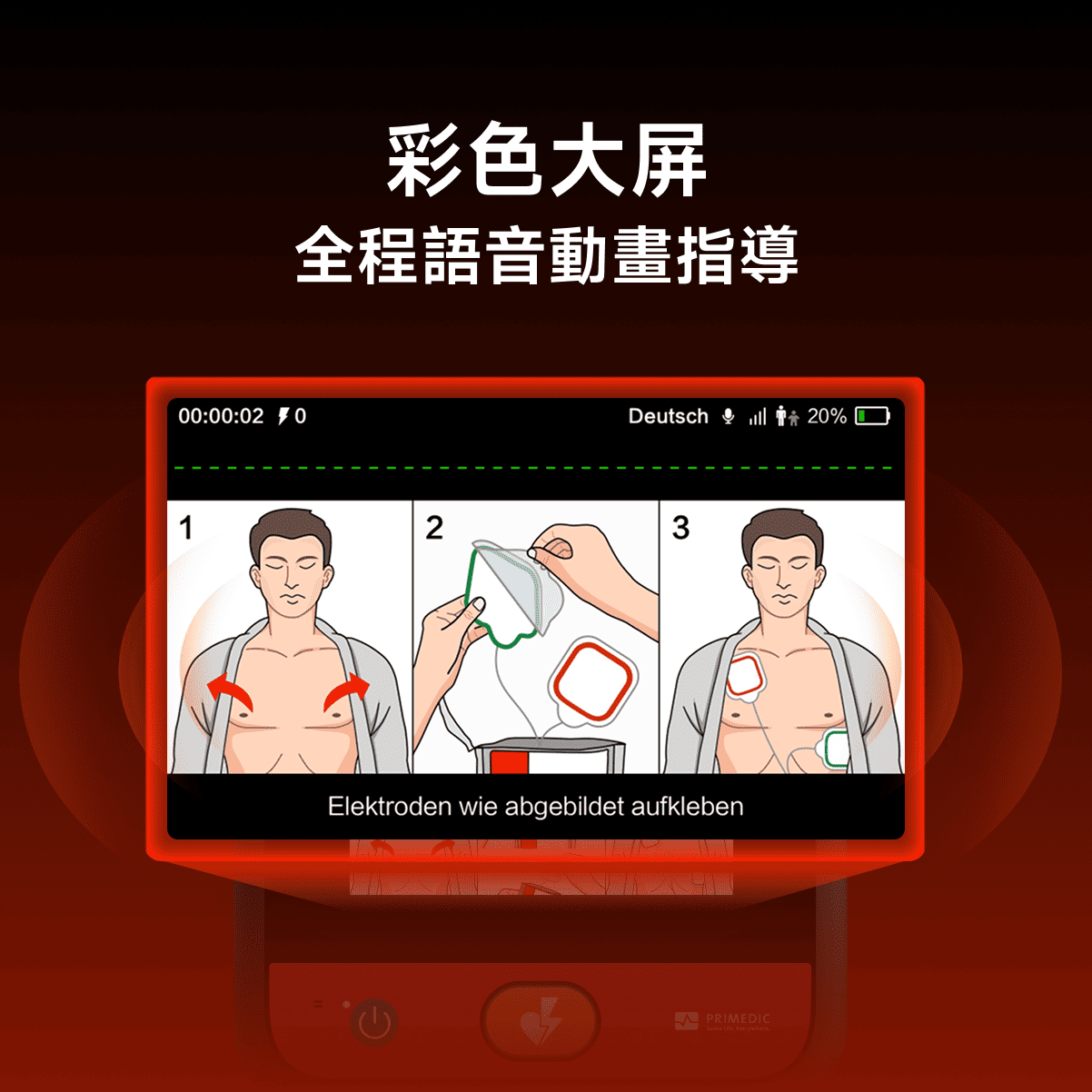
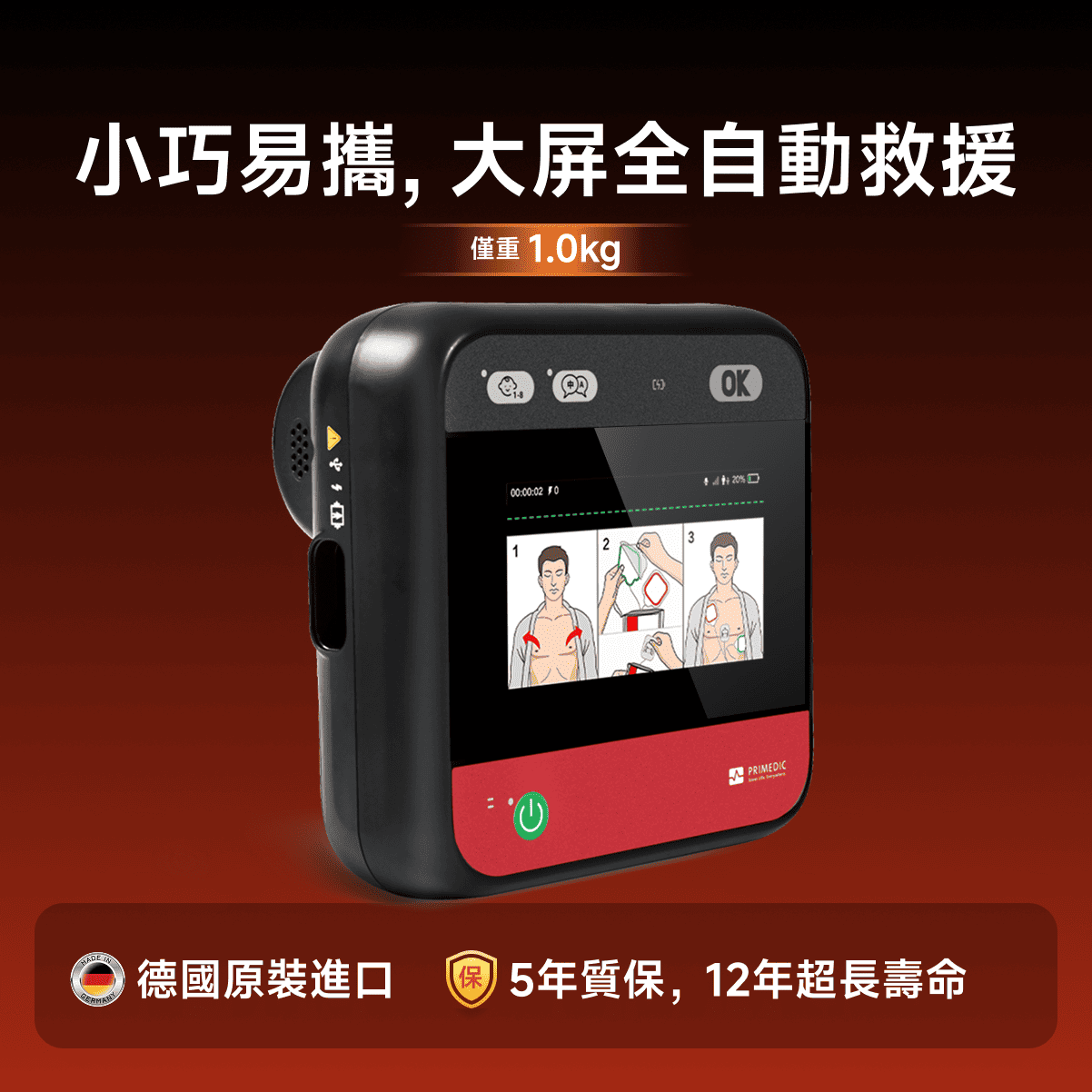
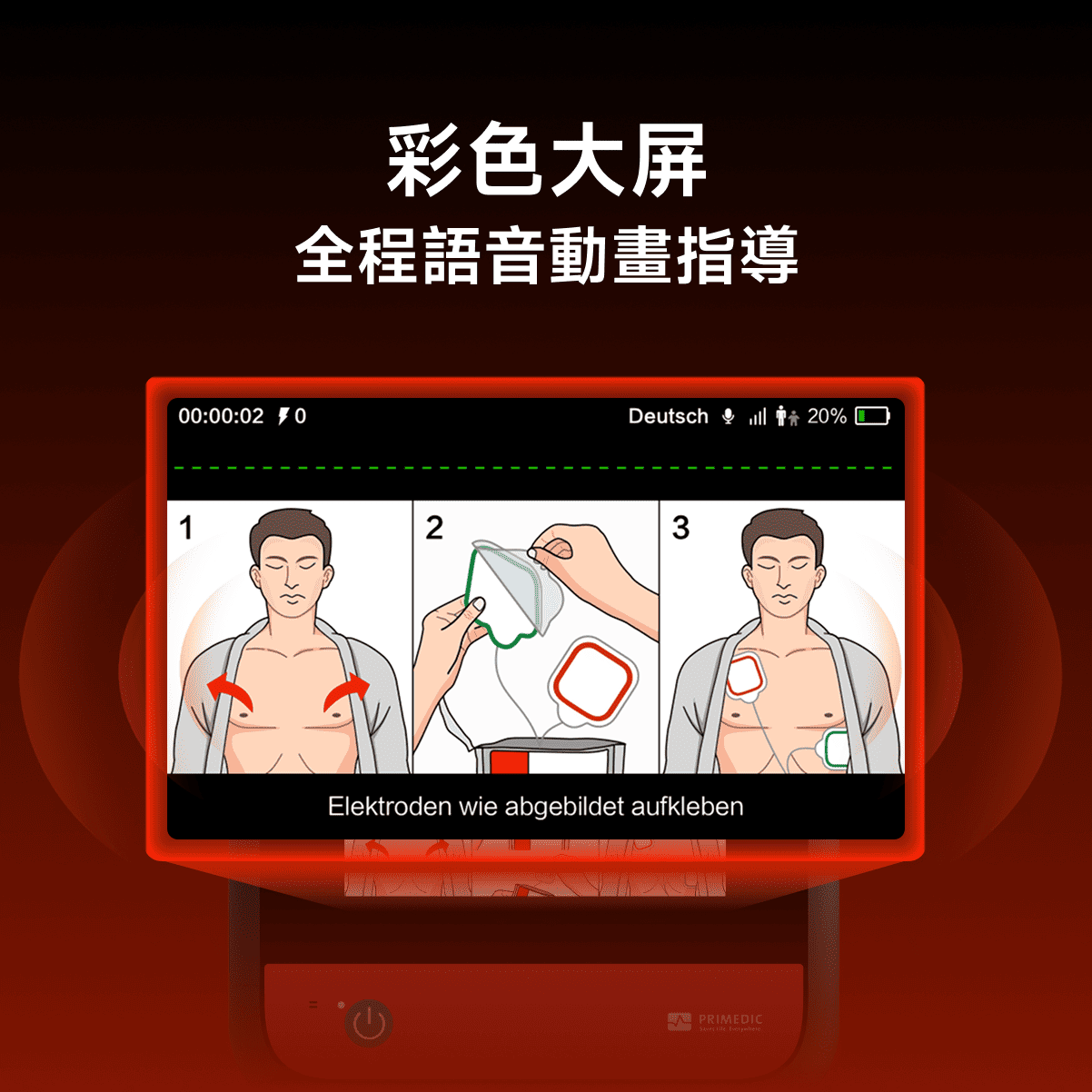
4.3-inch LCD with full voice and animation guidance
The animation simultaneously displays the operation steps, power status, and network signal strength, while clearly showing the currently selected language, power-on time, and number of discharges.

Automatic self-checking and full-time protection ensure that the equipment is always available
It has an automatic self-test function to ensure that the device is in a usable state at all times, including battery insertion/power on/daily/weekly/monthly/semi-annual self-tests; it covers the main control module/battery/power supply/electrode sheet, etc.

Built-in LTE/Wi-Fi
Built-in LTE/Wi-Fi dual-mode network functionality enables unified management of multiple devices through a cloud platform, real-time status monitoring, rapid transmission of emergency data, and remote tracking, improving emergency response efficiency and equipment maintenance convenience, and providing reliable technical support for emergency scenarios.
Human-machine interconnection, human-human interconnection, monitoring and early warning
The Primedic emergency medical services management cloud platform integrates IoT, mobile internet, and big data processing technologies to remotely manage, monitor, and issue early warnings for AEDs (automated external defibrillators) and their associated equipment, personnel, and volunteers. It can also interconnect with third-party systems such as urban surveillance systems and emergency medical systems.

Regarding the following issues
- Inappropriate electric shocks can trigger serious cardiac arrhythmias.
- Interference challenges in complex emergency scenarios: Device and operational artifacts (such as electrode contact noise, pacemaker pulses, and electromyography (EMG) drift caused by cardiopulmonary resuscitation (CPR)) can reduce heart rhythm recognition accuracy by more than 30%.
- Relying solely on electrocardiogram (ECG) analysis has limitations.
We propose an adaptive algorithm optimization framework (i.e., the iWave framework) .
This framework integrates electrocardiogram (ECG) and transthoracic impedance (TTI) signals for heart rhythm analysis.
Dual-path signal and heart rhythm analysis architecture
- The primary path of iWave analysis is responsible for classifying shockable rhythms, while the secondary path reconstructs and denoises the ECG signal to distinguish between genuine cardiac activity and interference artifacts.
Adaptive algorithm optimization
- iWaveReinforce combines adaptive optimization and data augmentation strategies to improve the model's ability to adapt to noise changes in emergency scenarios.

Fearless of challenges
Unafraid of harsh environmental challenges
Meet the requirements of different external working environments


PRIMEDIC AED (Automated External Defibrillator)
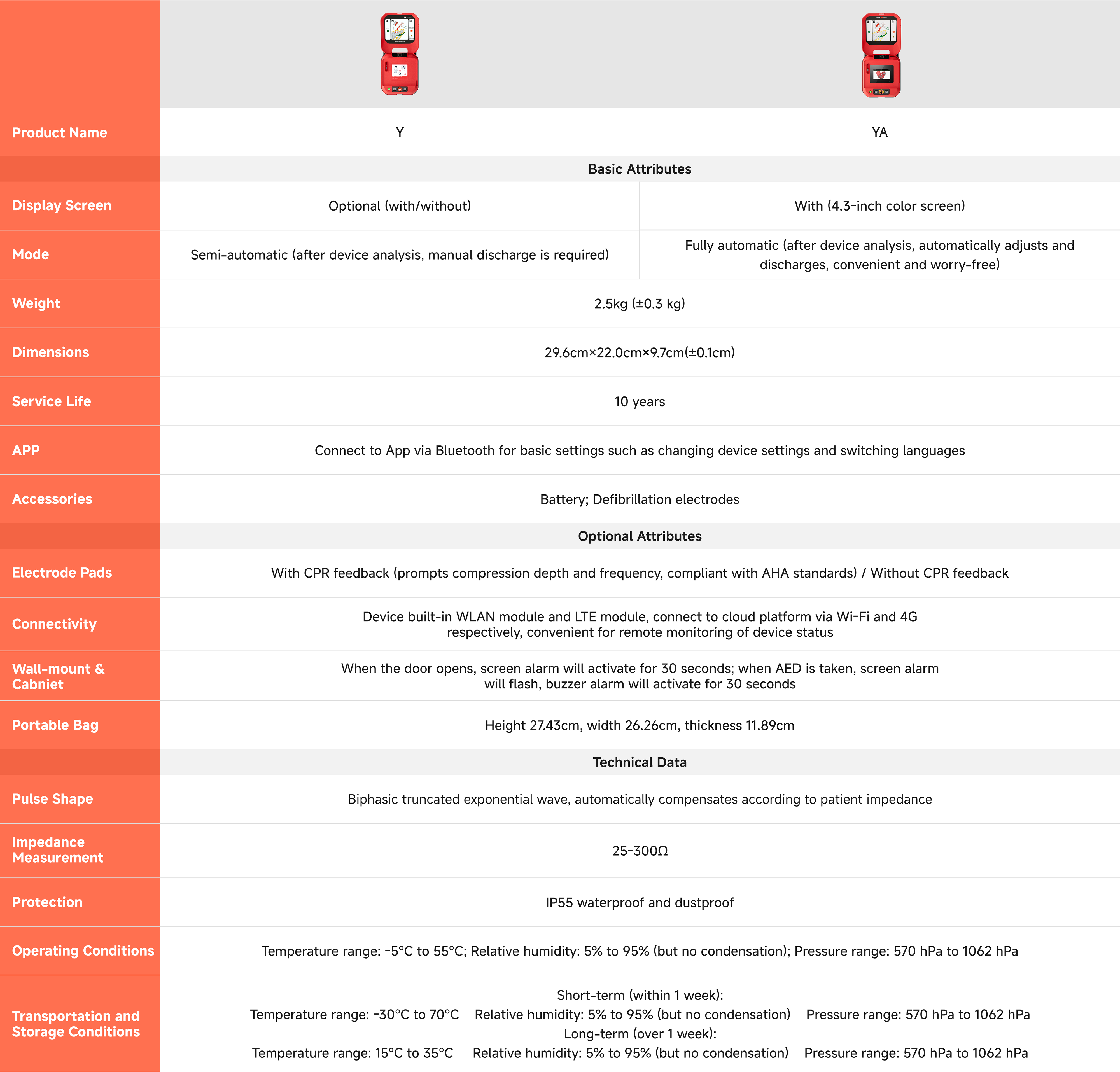
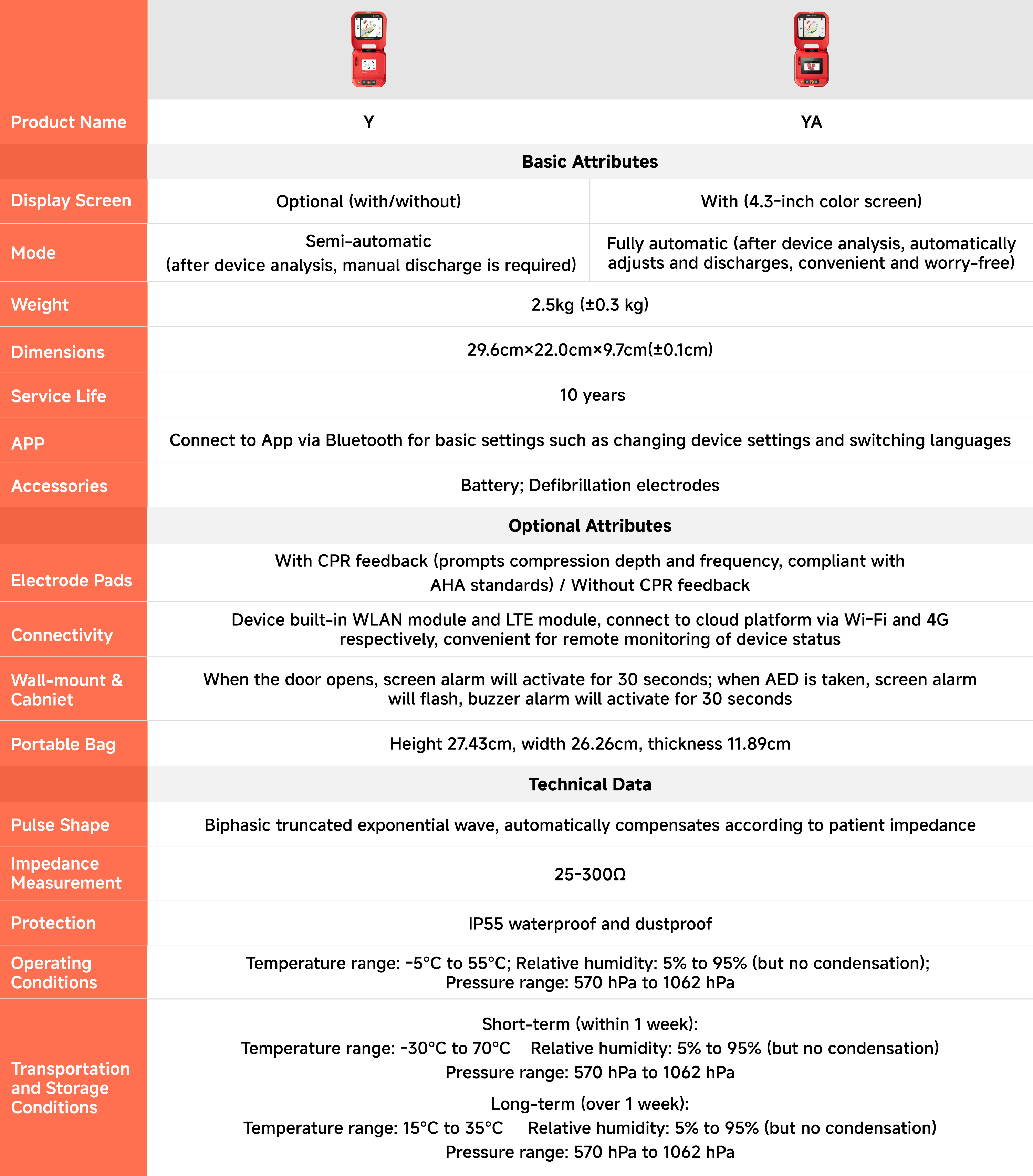
AED (Automated External Defibrillator) Y
Y
29.6cm x 22.0cm x 9.7cm(±0.1cm)
2.5kg (±0.3kg)
Supports 34 languages, and users can freely select 4 of them.
Maximum 360 joules
Y/YA Series Buying Guide
PRIMEDIC AED Y/YA series compared to other brands


have
none
Convenient and lightweight
have
none
Smarter
have
none
The rescue is more intuitive
360J
150-200J
Increasing energy without discount
5S
7-8S
Fast response
10 years
8 years
Equipment stability
5 years
4 years
Long battery life
5 years
2 years
Long-lasting electrode pads
4 types
2 types
Strong globalization capabilities
It can store 10 hours of ECG data.
It can store 15 minutes of ECG data.
Provide a reliable basis for the connection between pre-hospital and hospital care.
have
none
More convenient rescue
German technology
Domestic
More stable treatment
52 years
3-5 years
After 52 years of precipitation
none
have
Strength is proven by facts.
Rescuers can contact customer service with pictures or videos of rescuers and get a free replacement of electrodes.
none
Good service
Standard accessories

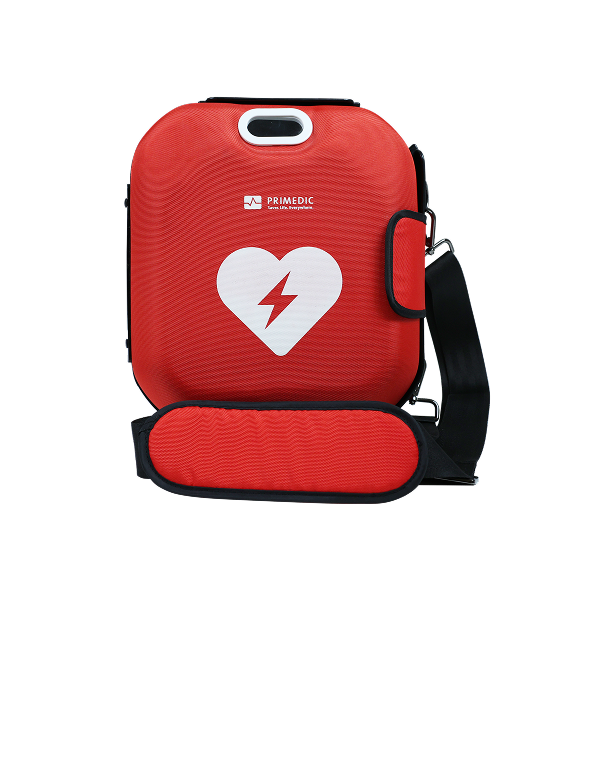


Product Recommendations
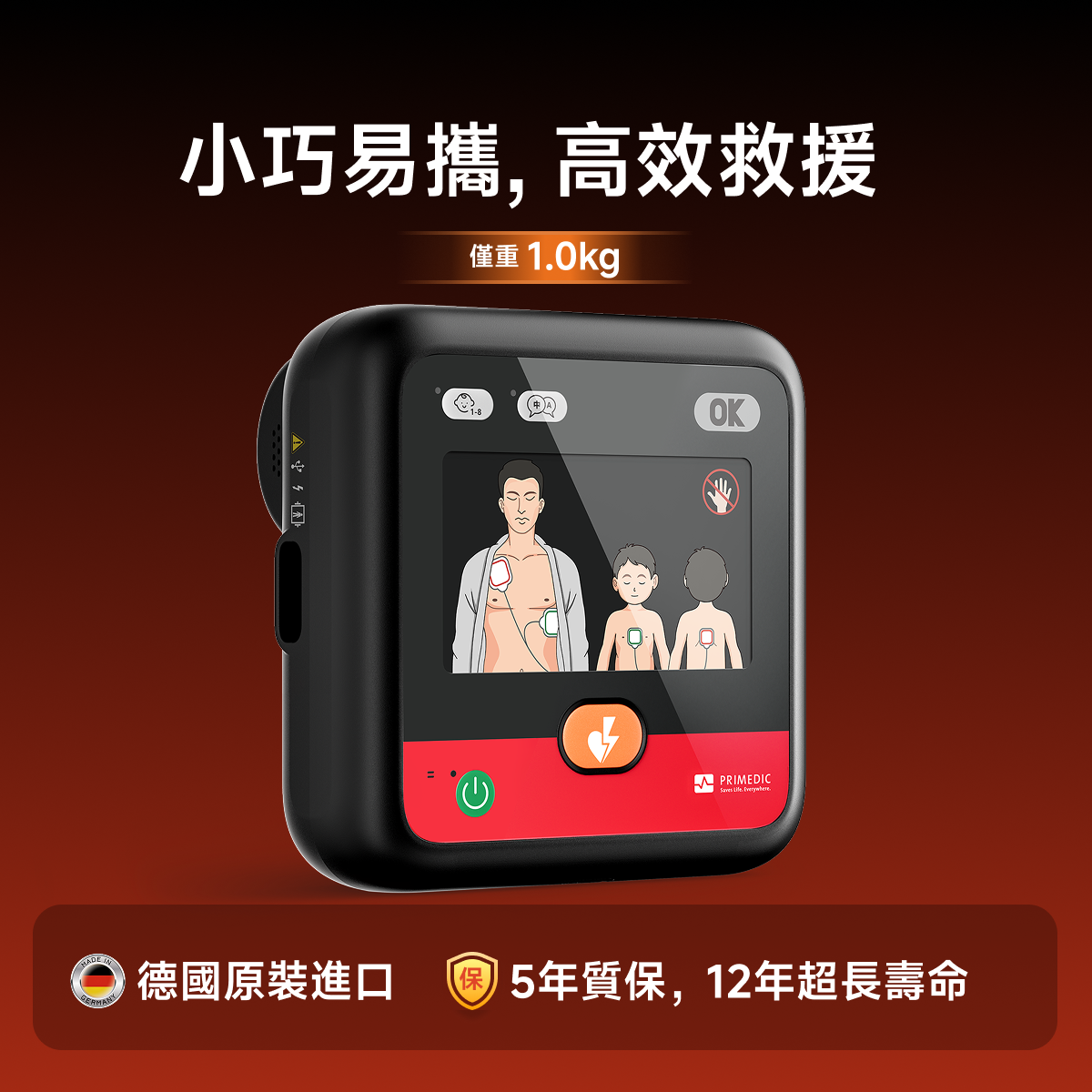
FAQs
The device does not respond when powered on/turned on (no startup prompt, screen does not light up, or beeps sound after pressing the power button).
Hello! If your AED is unresponsive when powered on, it may affect your emergency use. Please immediately follow the steps below to troubleshoot:
① Make sure the battery is installed correctly (open the battery compartment of the host and check whether the battery clip is fastened tightly and not loose or misplaced);
② Replace the backup battery (if available) and try to restart the device (note that the battery model must match the device and use a dedicated lithium battery);
③ If there is still no response, it means that there may be a hardware failure in the host or battery. Do not disassemble it yourself. Please contact the brand after-sales service immediately and replace the spare AED for emergency use to avoid affecting emergency needs.
The status display shows an "X" mark/the fault red light flashes (including details such as the red light flashing frequency and accompanying prompt sound).
Hello! If the AED displays an "X" or a flashing red light, it is a fault alarm signal and requires the following processing:
① Follow the customer service instructions to troubleshoot (if the electrode pad is not connected, reconnect it tightly; if the battery is expired, replace it). After troubleshooting, restart the device to see if the fault is eliminated.
②If the fault persists, it means the device requires professional repair. Please stop using it immediately and contact after-sales service. At the same time, record the time of the fault and the flashing frequency to facilitate after-sales service to quickly locate the problem.
Screen display/operation abnormalities (distorted screen, black screen, inverted screen, unresponsive touch screen/touch offset, affecting viewing of operation instructions)
Hello! Screen issues may affect the viewing of "electrode placement instructions" and "heart rhythm analysis results" during emergency treatment. Please address these issues based on the specific situation:
① Screen distortion/black screen: First check the battery power supply (replace the battery and restart the computer to rule out insufficient power). If the problem persists, the screen cable may be loose or damaged. Do not knock or press the screen. Contact after-sales service for a replacement.
② Screen is inverted/touch screen is not working: Enter the device's "setting mode" (some models can be entered by long pressing the "menu button", such as Jiuxin Medical AED), and try to restore the "screen display default settings" and "touch screen calibration"; if the calibration is invalid, it means that the system or touch screen hardware is faulty and after-sales service is required. During this period, a spare AED will be used instead.
The device has no sound output (missing emergency voice guidance, fault prompt tone) / abnormal sound (noise, freeze, abnormal volume)
Hello! The AED's voice instructions are crucial for first aid (e.g., "Please apply electrodes" or "Analyzing heart rhythm"). Abnormal sounds require urgent attention:
① No sound: Check if the device volume is accidentally set to "mute" (some models can be adjusted by long pressing the "volume button" and the screen will display the volume icon). If the volume is normal but there is still no sound, it may be a speaker failure;
② Abnormal sound (noise/stuttering): Restart the device first to eliminate temporary system interference. If the abnormality persists, it indicates that the speaker or audio module is faulty. In all cases, you need to stop using the device and contact after-sales service. At the same time, ensure that the backup AED sound function is normal to avoid being unable to obtain voice guidance during emergency treatment.
The appearance of the host is damaged (cracks in the shell, deformation of corners, loose interfaces, which may affect the sealing or structural stability of the device)
Hello! Damage to the AED main unit may affect the device's sealing (such as waterproofing and dustproofing) or internal structure. Please handle it with caution:
① If the damage is only scratches on the outer shell, with no loose interfaces or exposed internal parts, first check the device's self-test function (after turning it on, wait for the "Self-test passed" prompt, which is usually a solid green light). If the self-test is normal, you can temporarily use it, but you need to record the damage and contact after-sales service to replace the outer shell later.
② If the damage causes the interface to become loose (such as deformation of the electrode slot) or internal parts to be exposed, do not use the device. Immediately contact after-sales service for a safety assessment and replace it with a spare AED to avoid connection failure during emergency treatment.